Language and methodological experts from IITU planned and conducted a series of training sessions from May 6 to 11 on the topic "Blended Learning Tools: Designing a Lesson" using the ZOOM online platform. Teachers from schools in Shymkent, Astana, and Almaty, involved in a project to improve literacy among children who do not speak Russian, participated in the training sessions.
The leading speakers of this training were Dinara Aliyeva, Candidate of Pedagogical Sciences, Associate Professor of the Department of Languages at IITU, specializing in the Russian language, and Ainur Suranchina, Senior Lecturer and expert on Student Voice at the Almaty University of Energy and Communications, specializing in English.
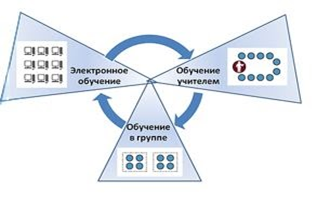
Dinara Aliyeva notes that blended learning is one of the most innovative and progressive areas in modern education. According to her, "There is a general scheme for the blended learning model. Interestingly, blended learning was not so popular in the past and was used either in schools for gifted children (for example, at the Stanford School for Gifted Children) or in schools for children with disabilities. Only in recent years has it become a full participant in the educational process."
In general, methodological experts consider several main trends in blended learning in 2024:
- Introduction of artificial intelligence
- Artificial intelligence simplifies the lesson development process
- Learning Experience Platforms
- Social learning
- Easy-to-use high-quality content
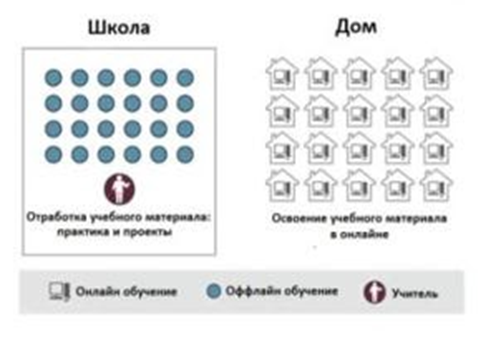
The training, lasting 60 minutes, focused on practical work with teachers. Experts presented the advantages and possibilities of organizing a lesson in a blended learning format. As Dinara Aliyeva explains, "There are various options for blended learning. There are rotary models. They assume that there are some points (stations) that students visit. The visit can be group, individual, clearly organized, or organized according to some individual plan. The most understandable and well-known model is the flipped classroom model, which assumes that there is learning at school and at home. At home, students get acquainted with educational material online, and at school, they put it into practice in projects and active learning. It is also possible to work on this material at home. But in any case, in a flipped classroom, we assume that the student is working online at home and actually getting to know the new learning material. This model is very common. For example, in France, there is an Association for the Flipped Classroom."
Dinara Aliyeva emphasized that it is important to understand that reading the textbook on your own is a seemingly simple task. But when a teacher simply offers to read a textbook to a student, nothing changes compared to a traditional lesson in a traditional school. The difference is that in a flipped classroom, they begin to use various options for online interaction with the student to understand what they did at home and build their interaction in the classroom based on that. To do this, you can use various surveys, tests, and give interactive tasks. They allow the teacher to see who actually read and understood the material.